![logo-white.svg]](https://www.celus.io/hubfs/logo-white.svg)
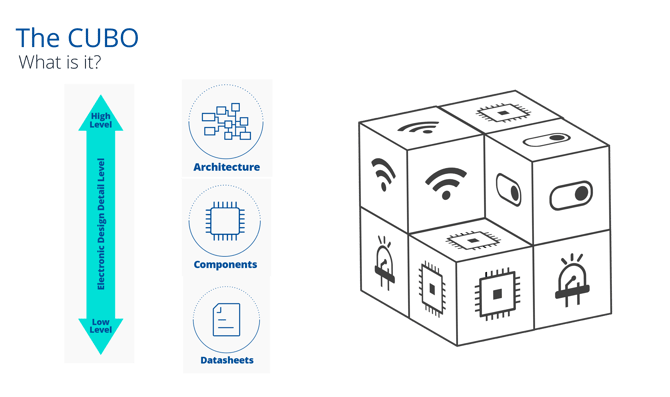
A CUBO™ is the smallest reusable functional block within a Project that defines a specific electronic capability. Rather than representing just a single component, it encapsulates a complete implementation of a function, structured as a digital, application-ready datasheet.
Within the CELUS Design Platform, a CUBO™ acts as a modular building block that enables engineers to move from functional intent to validated implementation efficiently. It combines technical documentation, schematic context, and lifecycle intelligence into one structured entity, reducing the manual effort traditionally required to interpret and compare disparate datasheets.
Core Elements of a CUBO™
A CUBO includes all the information required to assess, select, and integrate a component into a hardware architecture:
1. CUBO™ Description: Each CUBO™ begins with a clear explanation of the functionality it delivers. This description defines the specific task the circuit performs within a system, such as voltage regulation, signal conversion, communication interfacing, or processing.
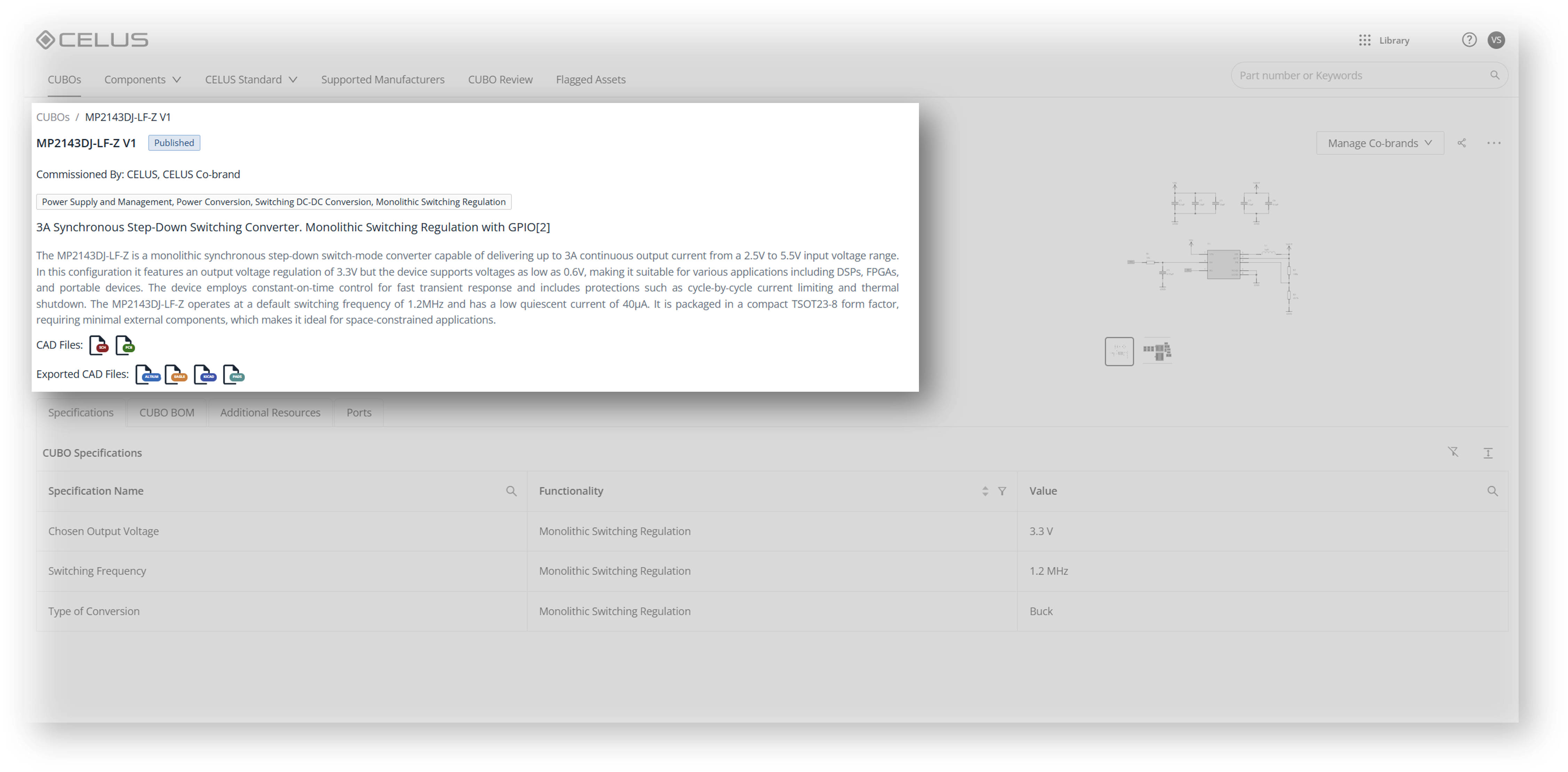 CUBO™ Description
2. Specifications: CUBOs contain structured performance parameters relevant to the function, like operating voltage ranges, protocol support, MCU architecture, master/slave configuration, and other key constraints. These specifications enable both the CELUS Platform and engineers to assess technical compatibility quickly and objectively.
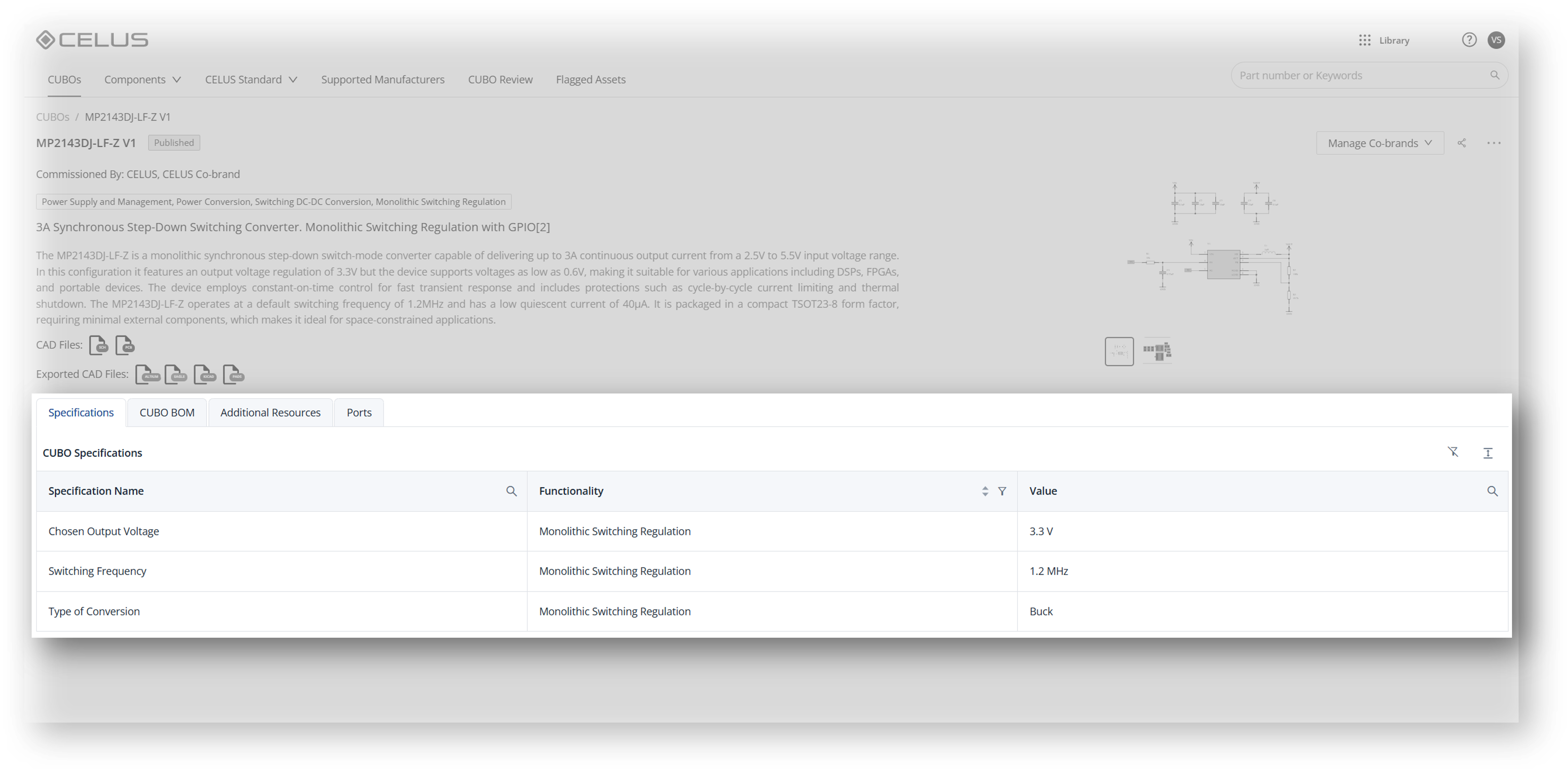
CUBO™ Specifications
3. Bill of Materials (BOM) with Lifecycle Status: CUBOs contain a BOM where all components have lifecycle status information, such as whether a component is active, end-of-life, or discontinued. This information helps electronics developers assess the long-term availability and support for the component.
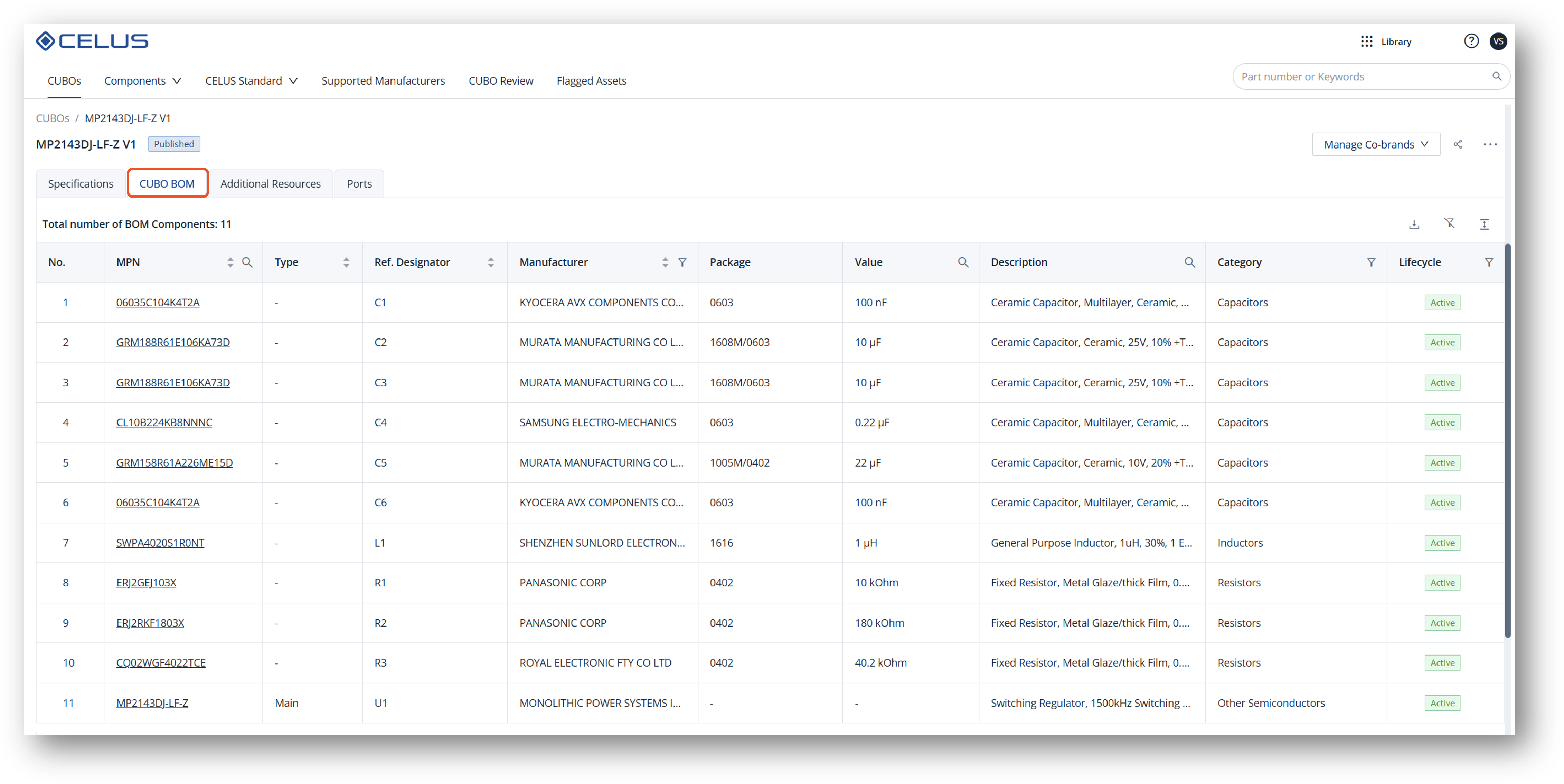 CUBO™ BOM
4. CUBO™ Schematics: Schematic reflects recommended configurations such as decoupling capacitors, pull-up or pull-down resistors, and other support circuitry. The CUBO™ creation workflow emphasizes accurate schematic capture based directly on manufacturer application notes.
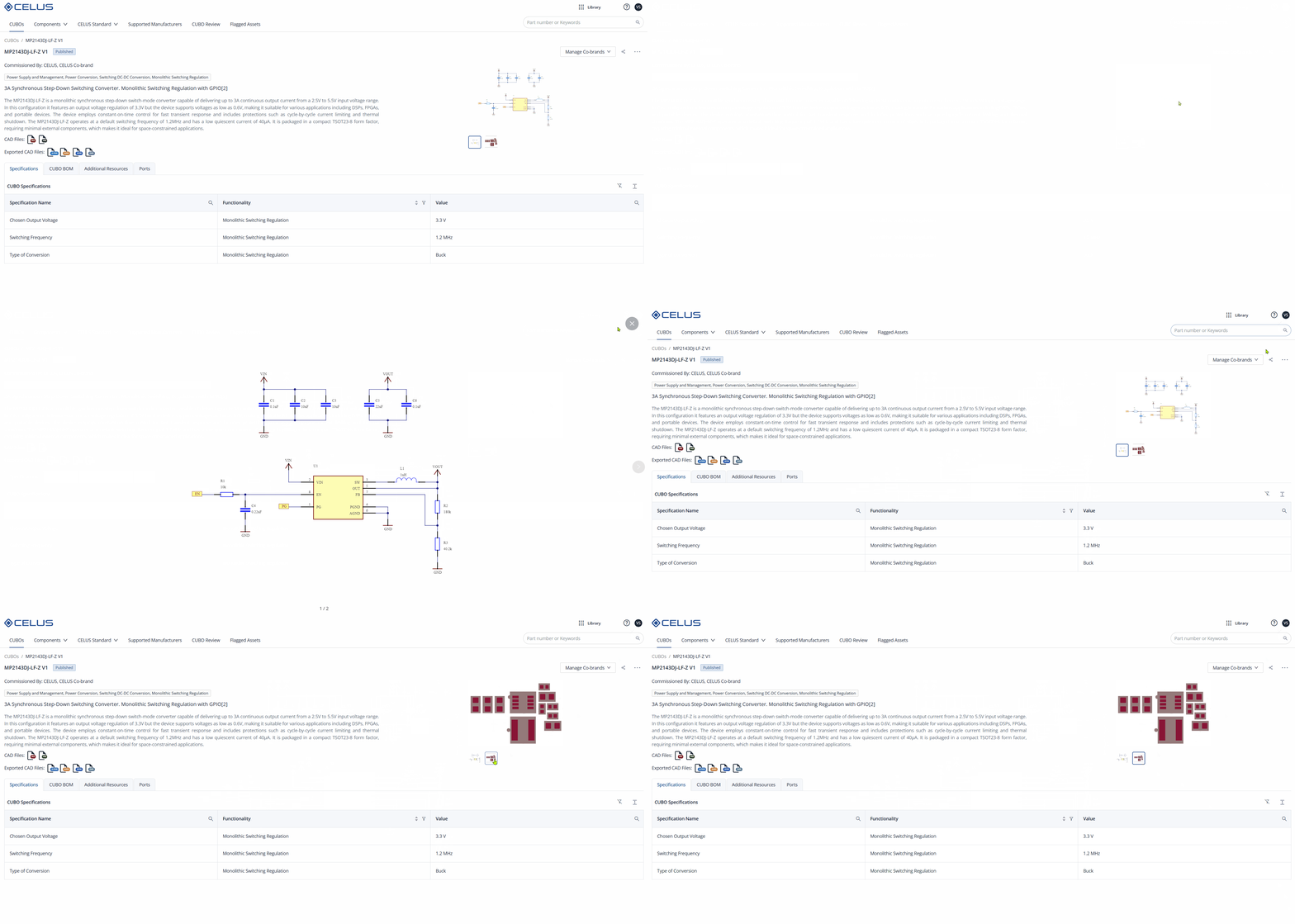
CUBO™ Schematics
5. Ports Information: Each CUBO™ clearly defines its input and output ports, including signal types, electrical constraints, and connection requirements. This structured Port description enables seamless integration into larger system architectures and supports modular design workflows.
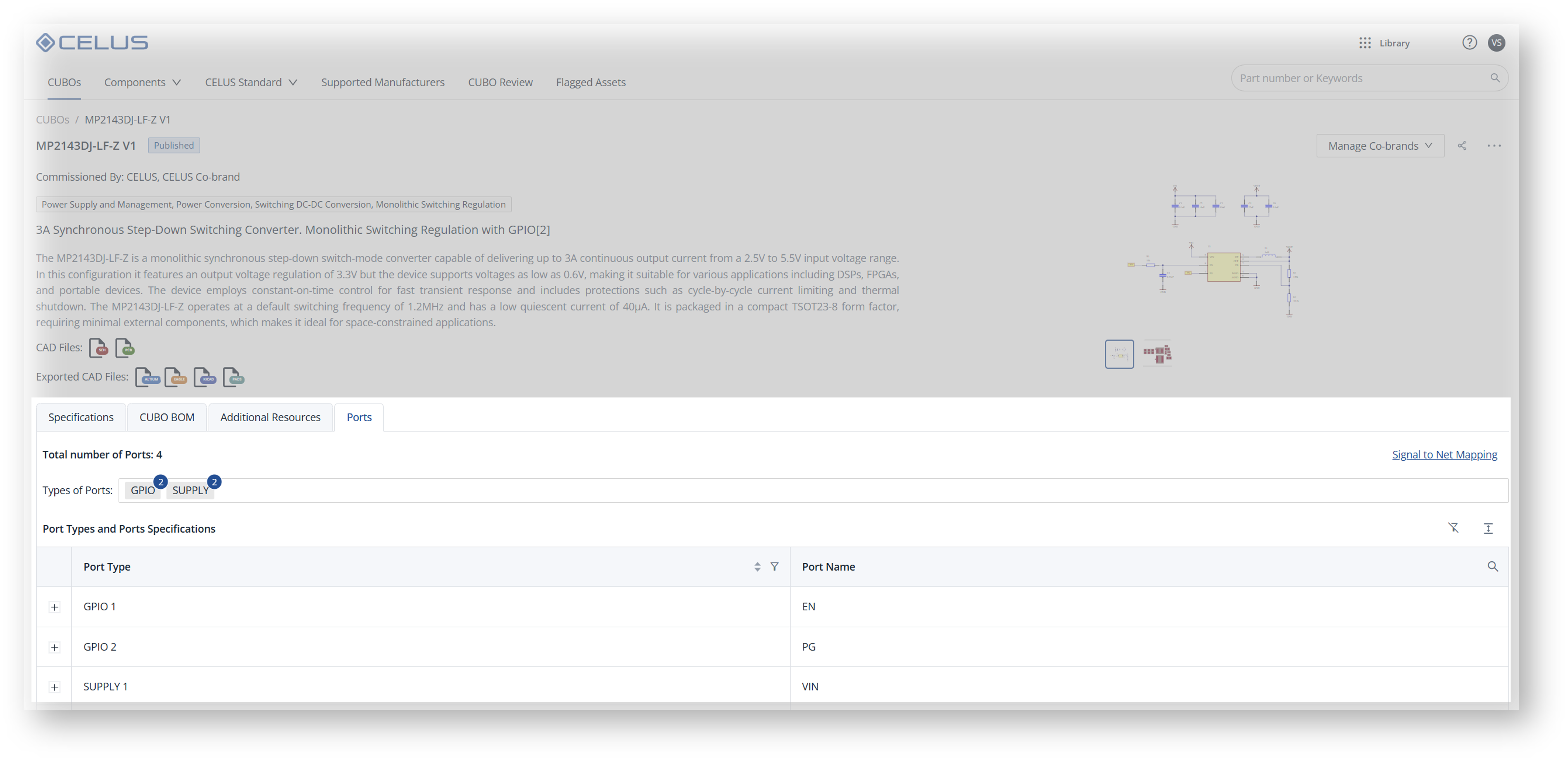 Ports defined in the CUBO™
6. Additional Resources: CUBOs provide direct access to manufacturer documentation, including application notes, technical references, and where applicable, code repositories. This ensures traceability and technical transparency.
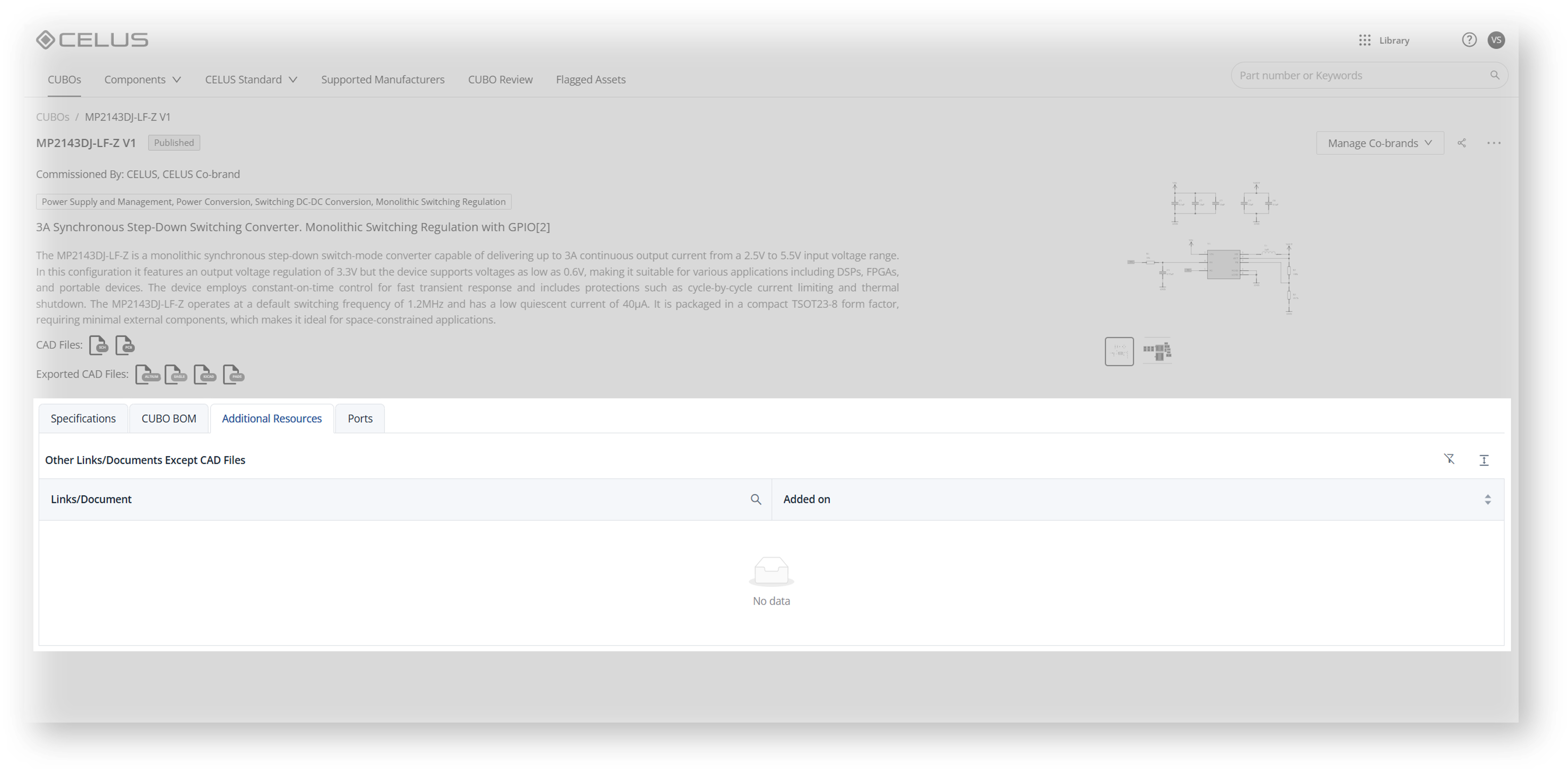
Additional Resources
Within the CELUS Design Platform, CUBOs are more than documentation artifacts. They are reusable, validated design modules that enable:
-
Engineers to translate functional requirements into implementation-ready circuits.
-
Manufacturers to position their components within real application contexts.
By structuring component knowledge into modular, interoperable design blocks, CUBOs reduce design friction, improve compatibility assurance, and accelerate Project development. They also create a standardized interface between engineering intent and component supply, strengthening collaboration across the electronics ecosystem.